
Guides · · 2 min read
3D printing vs injection moulding – which one makes sense for your part?
An injection mould is a major investment; 3D printing needs none. Where the line sits and how to decide for your part.
Also available in: Slovenščina, Italiano
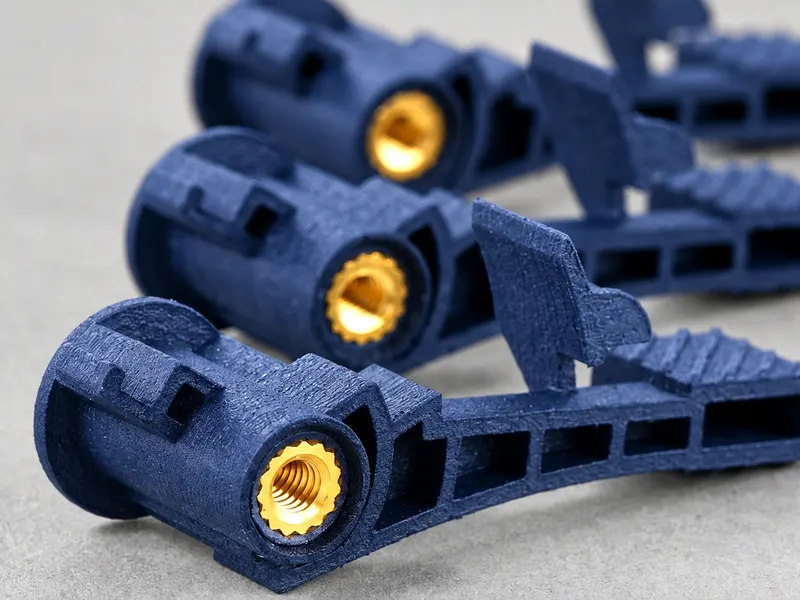
Whenever a company needs a plastic part – a housing, a bracket, a spacer, a cover – the same question comes up: print it or tool it? The honest answer is rarely "always one or the other". It mostly depends on volume, how final the design is, and how soon you need the parts.
The key difference
Injection moulding needs a mould. Tooling is a significant up-front investment with a long lead time, but once it exists, each part is cheap and fast to produce. It is the right choice for high, repeat volumes of a design that will no longer change.
3D printing needs no tooling. Parts are built directly from the 3D model, layer by layer. The cost per part is higher than moulding at high volumes, but there is no up-front investment and every design change is just a new file.
When 3D printing wins
- Prototypes and test fits – while you are still checking form, fit and assembly and the design will change.
- Low-volume production – when quantities don't justify a mould yet.
- Spare parts – when the original part is discontinued or the lead time is too long, and only a few are needed.
- Bridge production – when the mould is on order but you need parts sooner.
- Customised items – when every part or batch is different, such as promotional items with different logos.
When to look at moulding
- When the product is final and will be made in large quantities for years.
- When surface finish, tolerances or material requirements are beyond what 3D printing can deliver.
- When unit cost is the main criterion and the tooling investment pays off.
The break-even point isn't a fixed number. It depends on part size and complexity, material and cosmetic requirements – which is why it's easiest to assess on a real part.
The common route: print first, tool later
Many companies start with a 3D printed prototype, check fit and function, refine the design and only then commit to a mould. Mistakes are caught before they are machined into expensive steel. And if demand turns out lower than expected, small printed batches remain an option.
FAQ
Is a 3D printed part strong enough for real use?
For many functional parts – brackets, housings, covers, jigs and fixtures – yes. Strength depends on the material, the geometry and the print orientation. Tell us about the loads and environment and we'll suggest a suitable material.
Can I use the same CAD model I'd use for moulding?
Usually, yes. A model designed for moulding is generally a good starting point for printing; we'll suggest small tweaks if needed.
Request a quote
Send us your 3D model (STEP or STL) and the quantity via the quote request form – we'll prepare an offer and tell you whether printing makes sense for your part. More on rapid prototyping and low-volume production.